
What is perimenopause?
Perimenopause and menopause are often treated as if they mean the same thing. They do not.
Perimenopause can feel like puberty in reverse – some days, as though you have stepped straight into a storm.
Menopause, by contrast, marks the end of the menstrual years and the beginning of a new hormonal phase. In time, it can feel like the calm after the storm. The sun does rise again in the second half of life.
Hold on to hope. The best years may still be ahead of you.


From perimenopause to life after menopause
Perimenopause
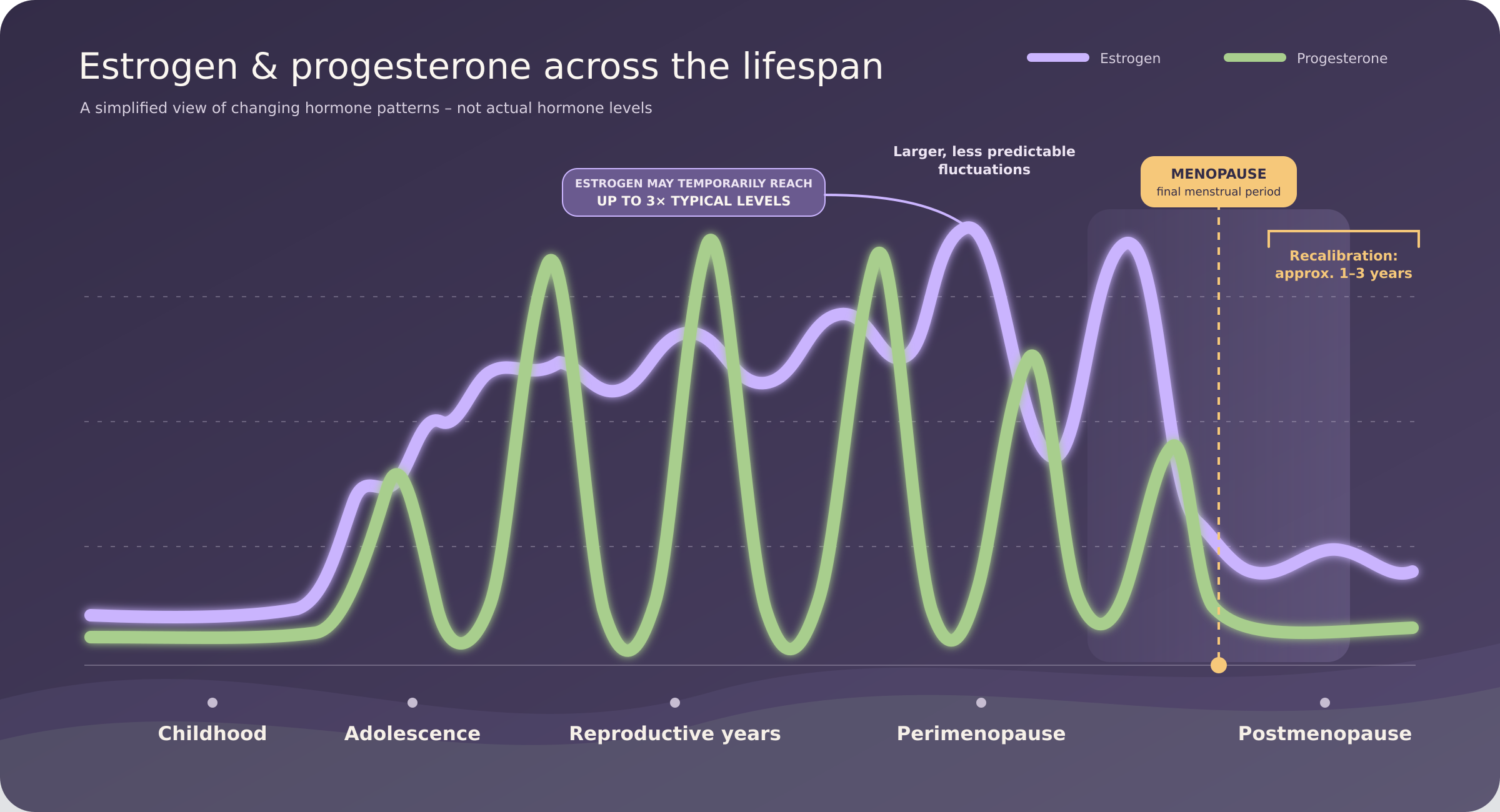
Perimenopause is the long hormonal journey leading up to the final menstrual period. Changes can begin while periods are still regular, and symptoms can come and go for several years.
Menopause
Menopause is the final spontaneous menstrual period. You only know which period was the last one after twelve months without another period.
Postmenopause
Postmenopause is the term traditionally used for the years after menopause. It is a new hormonal phase that lasts for the rest of your life, although symptoms may change or continue for some time.
Perimenopause
What surprises many women is how early the changes can begin. Most often, this happens sometime in the 40s, but for some women it starts in the late 30s. Periods may still arrive exactly as usual – making it easy to assume that anxiety, sleep problems, irritability or a new sensitivity to stress must be caused by something else.
Perimenopause is different for everyone. Symptoms may come and go, change over time and be influenced by both hormones and everything else going on in your life. That is why it matters to listen to your body – and to seek medical advice if something does not feel right, so that other possible causes can be ruled out.
What you are experiencing is real. And support is available.


Menopause
Menopause is the final spontaneous menstrual period. You only know which period was the last one after twelve months without another period.
The average age is around 52, although there is a wide normal range. Menopause can also happen earlier, or suddenly for medical or surgical reasons.
Menopause is not a period you need to “get through”. It is a point in time that marks the beginning of a new hormonal phase. The body continues to change and recalibrate during the years that follow.

When hormones change, the whole body can respond
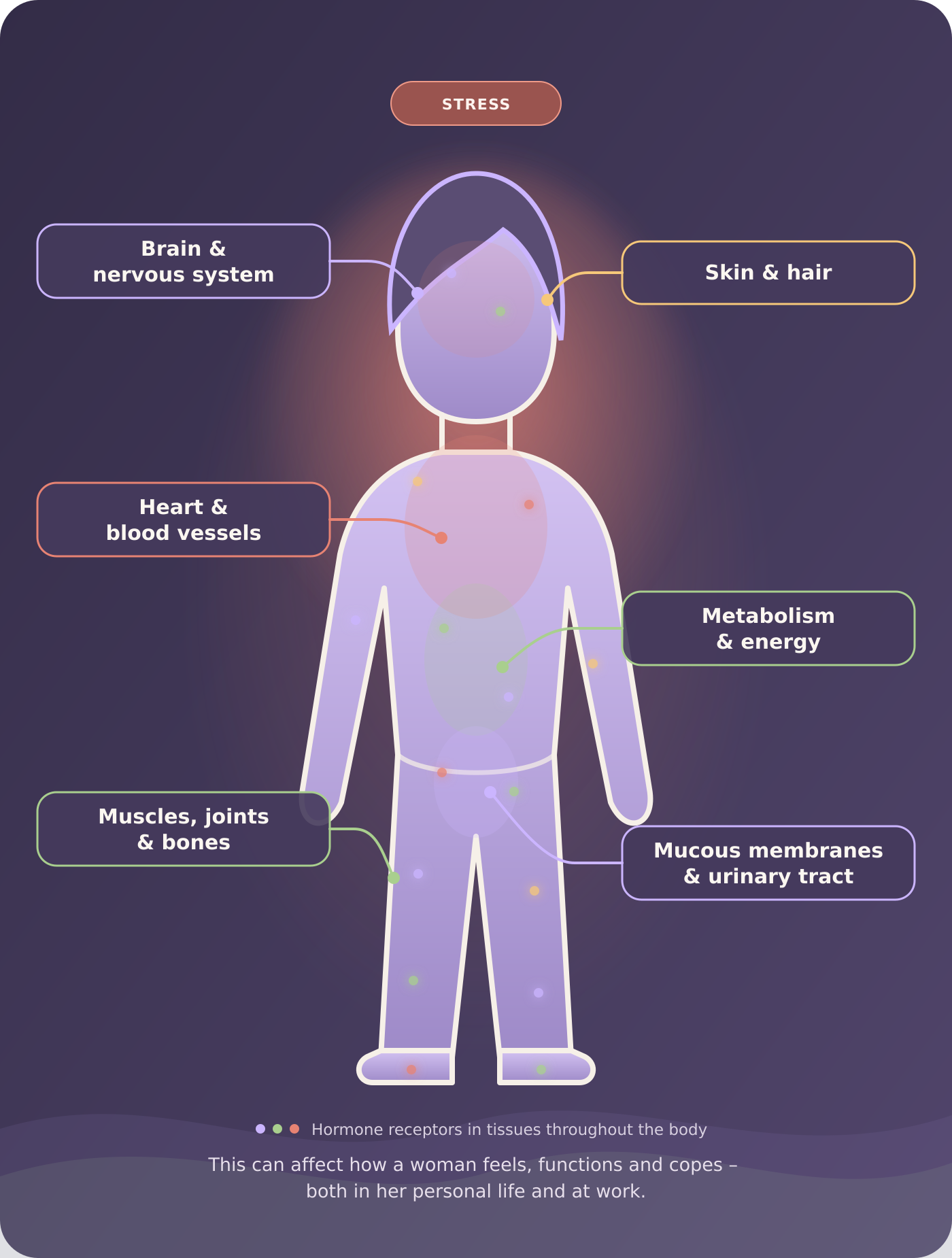
Sex hormones are often associated with periods and fertility. But receptors for hormones including estrogen, progesterone and testosterone are found in many tissues throughout the body. When hormone levels and the balance between them begin to shift, the effects can be felt in many different ways – not only as hot flashes or changes to your periods.
BRAIN, THOUGHTS & FEELINGS
Anxiety, irritability, low mood, increased sensitivity to stress and difficulty concentrating.
SLEEP & ENERGY
Difficulty falling asleep, waking during the night, fatigue and poorer recovery.
BODY & INTIMATE HEALTH
Hot flashes, heart palpitations, aches and pains, changes to skin and hair, vaginal dryness and urinary problems.
Not everyone experiences everything, and not everything that happens in midlife is caused by hormones. But this wider picture helps explain why perimenopause can be so difficult to recognise – and why so many women say:
“I don’t recognise myself.”
Life after menopause
Postmenopause is the medical term for the years after menopause. Hormone levels have settled into a new pattern, but the body may still need time to recalibrate. For some women, symptoms ease. For others, they continue or change. There is no single timetable.
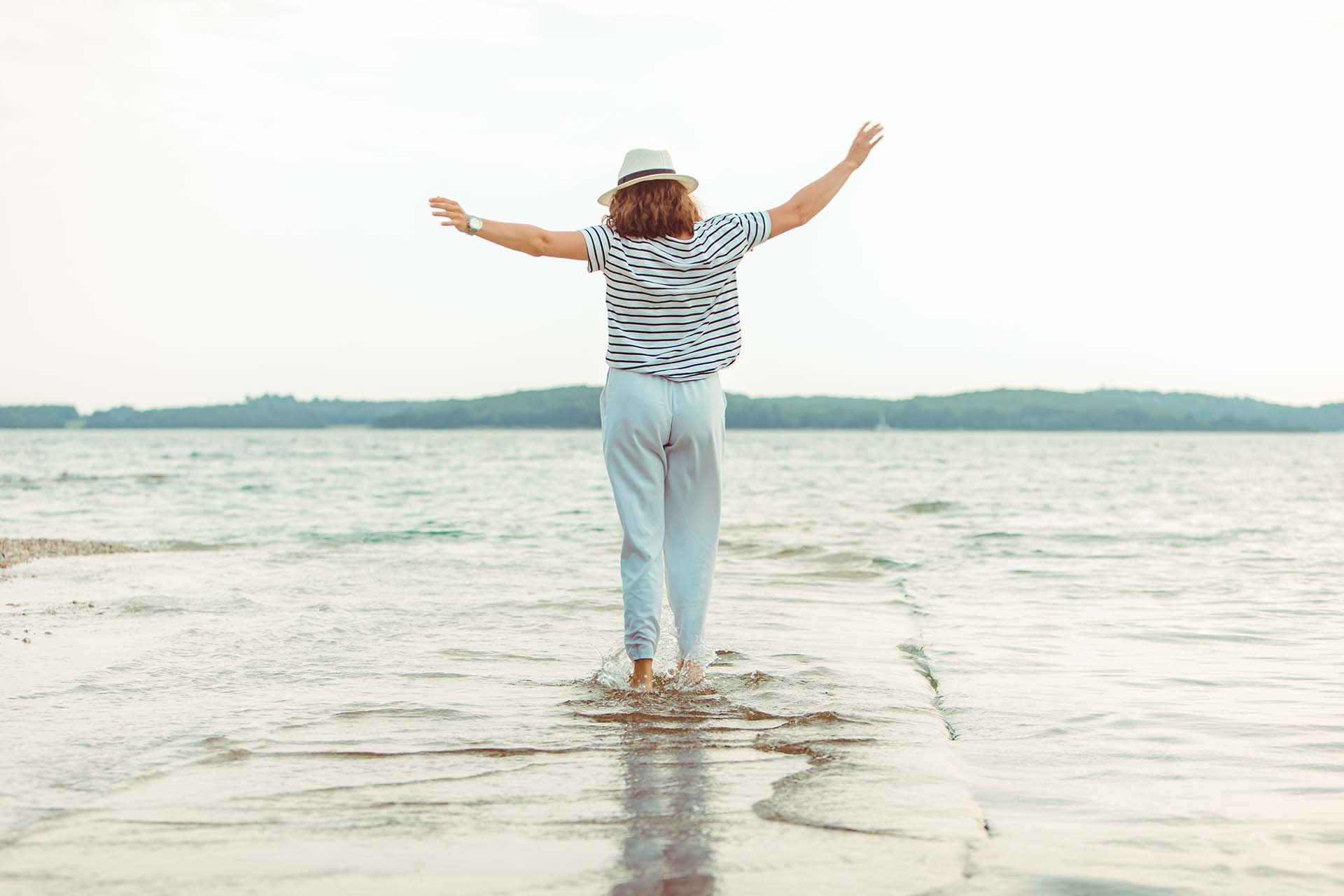
For many, this stage also brings relief and freedom: no periods, no fear of an unplanned pregnancy and a chance to reconnect with the body – and with what matters now. Sex and intimacy can change too and, for some women, become much better.
This is not about pretending that everything is easy. It is about knowing that life after menopause can hold far more energy, clarity and possibility than women have been led to expect.

“I have met far too many women who have been forced to leave their jobs at the height of their careers. Women who have lost partners, friends and their belief in themselves, just when they should have been thriving. This is not about weakness. It is about no one seeing what was happening.”
That is why we must do more. Women deserve better.
Helene Strandkvist, Founder and CEO, MeWe&You®
We hear this again and again
“Well, how are we supposed to know about perimenopause? Of course I have wondered about it. It would certainly explain things for me – including so many of my symptoms.”
— Åsa, 46, in perimenopause
“We talk about our first period. We talk about pregnancy and giving birth. But when it comes to menopause? Nothing.”
— Anna, 54, after menopause
You should not have to figure it all out on your own
MeWe&You® helps you follow how you feel, see your patterns over time and discover what you need.

MeWe&You makes menopause easier for women and working life better for everyone™
Contact
MeWe&You Health AB
Stockholm/Malmö/Luleå
hello@meweandyou.com
Explore
MeWe&You
©2026 MeWe&You. All Rights Reserved.